
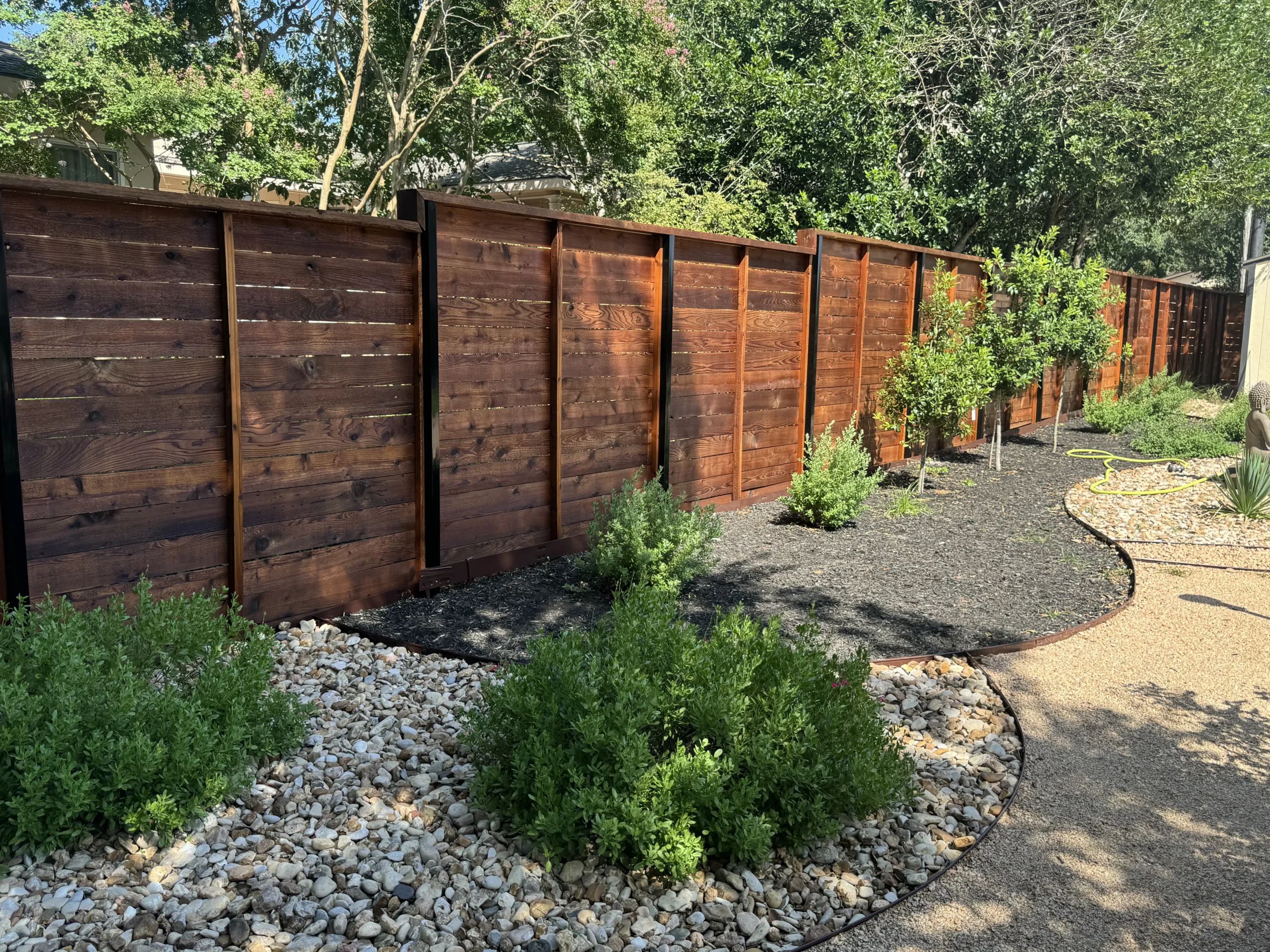
Your wood fence takes a beating from sun, rain and temperature swings every day. According to a study published in BioResources, ultraviolet radiation from sunlight initiates chemical changes in wood surfaces that cause discoloration and deterioration. Most homeowners want a simple answer: how often should you stain a fence to keep it looking good and structurally sound?
There’s no universal timeline. Your wood type matters. So does your local climate and the stain you originally used. This guide explains when your fence needs attention and what happens if you put it off.
How Often Should You Stain a Fence?
Plan on staining your wood fence every two to three years. This schedule protects the wood from moisture damage and UV degradation, which can turn it gray and cause splintering.
Some fences need more frequent care. A south-facing fence in Texas fades faster than a north-facing fence in milder weather. Lower-quality stains might last only 18 to 24 months before you’ll need to reapply.
New fences follow different rules. Pressure-treated lumber needs six months to weather before it accepts stain properly. Cedar and redwood are usually ready within 30 to 60 days after installation, once their natural oils settle.
Signs Your Fence Needs Restaining
Look for these warning signs between scheduled staining cycles:
- Water soaks in instead of beading up when it rains
- Wood has turned gray or lost its color
- The grain feels rough or fuzzy
- Small cracks or splits appear in the wood
- Previous stain is peeling or flaking
What Factors Affect How Often a Fence Needs Staining?
Several things determine how long your stain will last. Understanding them helps you plan maintenance before significant damage occurs.
Sun Exposure and Weather Conditions
UV radiation degrades wood fibers and stain pigments faster than anything else. Fences in full sun all day fade within two years. Shaded fences can stretch three to four years between applications.
Rain and humidity are different problems. Constant moisture makes wood swell, encourages mold and eventually causes rot. High-rainfall areas need annual inspections and more frequent staining.
Temperature swings stress wood through expansion and contraction. This cracks the protective stain layer, leaving bare wood exposed.
Type of Wood
Cedar fights off rot and insects naturally, which explains its popularity for fencing. It holds stain well, though its oils slow down absorption. Expect to restain cedar every two to three years under normal conditions.
Pine and pressure-treated lumber absorb stain faster but lack the same built-in defenses. You’ll probably need to reseal these every two years, possibly sooner if your weather is rough.
Redwood has similar advantages to cedar. Natural tannins provide some protection, but UV exposure still requires regular staining every two to four years, depending on sun exposure.
Type of Stain Used
Oil-based stains sink deeper into wood fibers and typically last three to four years. They handle water well and flex as the wood expands and contracts.
Water-based stains dry faster and don’t emit as strong an odor during application. Most last two to three years. They perform well in moderate climates but may require more frequent touch-ups in extreme weather.
Solid stains give you the most color and coverage, but take more work to reapply. Semi-transparent stains highlight the wood grain and typically need refreshing every two to three years. Clear sealers offer the least protection and fade within 12 to 18 months.
What Happens If You Wait Too Long to Stain a Fence?
Put off staining too long and you’ll pay more to fix the damage than you would have spent on regular maintenance.
Moisture Absorption and Wood Damage
Once the stain protection fails, wood soaks up water. The moisture causes swelling right away and warping over time. Boards that fit snugly develop gaps. Straight panels start bowing and twisting.
Wet wood grows mold and mildew. These break down the wood’s structure from the inside. The problem gets worse in humid climates where wood stays damp between rain events.
Cracking, Splitting and Rot
Unprotected wood shrinks unevenly as it dries after absorbing moisture. Surface cracks form and get deeper. Deep cracks weaken the fence and let insects in.
Wood rot comes next after persistent moisture exposure. Soft spots show up first, then spread through posts and boards. Rot means you’ll be replacing boards instead of just restaining. Bad cases need professional fence repair services before you can even think about staining.
Higher Repair or Replacement Costs
A fence that’s gone five years without staining usually needs major repairs before you can apply new stain. You’ll replace damaged boards and sand or brighten rough, grayed wood. These extra steps can double what you’d pay for a standard restaining job.
Really neglected fences might need complete replacement. Maintaining a fence every two to three years costs far less than replacing it after seven to 10 years of neglect. Professional fence staining services run a fraction of the price of full replacement.
Can You Over-Stain a Fence?
Yes. Applying stain too often or at the wrong time causes problems.
Staining before the previous coat wears off creates buildup. The wood can’t absorb fresh stain, which leads to peeling, flaking and uneven color. Solid stains that form a surface film are especially prone to this.
Staining in bad weather traps moisture under the new layer. You’ll see bubbling and early failure of the protective coating. Wait for dry conditions and appropriate temperatures.
Mixing stain types also causes trouble. Switching from oil-based to water-based (or the reverse) without proper prep often results in adhesion failures.
A professional assessment prevents these mistakes. Experienced contractors recognize when wood is ready for restaining and which products suit your situation. Check our fence staining FAQs for more guidance on timing and best practices.
Looking for Professional Fence Staining in Georgetown and Central Texas?
Knowing when to stain your fence is one thing. Having the time and skill to do it right is another.
Stain Guys specializes in exterior wood protection for homeowners throughout Georgetown and Central Texas. We understand how local weather affects fence longevity and which stains perform best in Texas heat and humidity.
We handle the prep work, from cleaning and brightening to minor repairs. Our fence staining services deliver consistent results that keep your fence looking great for years.
Request a free fence staining quote today and protect your investment with professional care.
0 Comments