
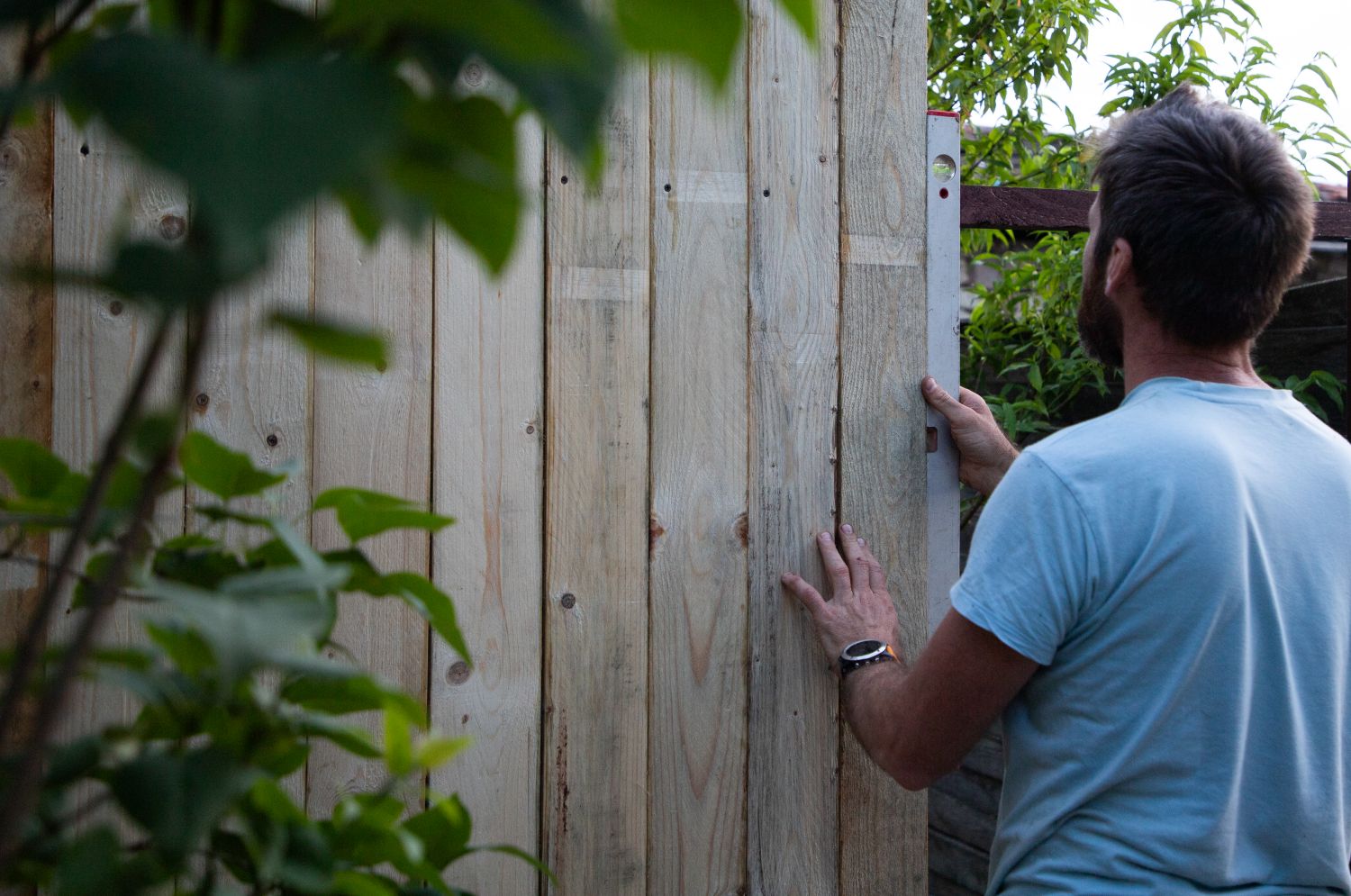
According to the U.S. Forest Service Wood Handbook, wood defects such as cracks, rot, and joint failures allow moisture to penetrate deep into the wood, accelerating decay even when protective coatings are applied afterward. Most homeowners planning a fence staining project do not factor this in. Staining over damaged wood does not repair the underlying problem. It locks moisture inside, accelerates decay, and cuts the life of both the fence and the finish short.
Before picking up a brush or renting a sprayer, take a close look at the fence. Knowing the warning signs can save real money and prevent having to redo the job.
Can You Stain a Fence Without Repairing It First?
In most cases, no. Stain works by penetrating and sealing wood fibers. When the wood is cracked, rotting, or structurally compromised, the stain has nowhere solid to bond. It rests on top of the damage, creates a surface-level finish, and traps moisture underneath.
A fence in poor condition will cause the stain to peel or flake within months. Repairs that would have been minor before staining become more expensive and disruptive after the fact. Fixing structural problems first gives the stain a clean, stable surface and extends the life of the whole project.
What Are the Most Common Fence Issues That Need Repair?
Damage builds up faster than most people expect, and it is not always visible from the yard. A fence that looks serviceable from 20 feet away can reveal real problems at close range. These four signs are worth taking seriously before scheduling a stain.
Loose or Leaning Posts
Posts carry the full weight of the fence panels and absorb constant weather stress. When a post shifts out of vertical or wobbles at the base, that is a structural failure no amount of stain can reverse. Staining a fence with unstable posts puts the whole structure at risk of collapse, turning a cosmetic project into an emergency repair.
Cracked or Split Boards
Even hairline cracks give water a way in. Repeated wet-dry and freeze-thaw cycles widen those cracks steadily and push rot deeper into the wood. Boards with significant splits or deep surface checks should be swapped out before staining. Sealing cracked wood under a coat of stain traps the moisture that is already there and speeds up the failure.
Rotting Wood Near the Ground
Ground-level boards and posts sit in the moisture-richest zone of the fence. Soil contact, standing water after rain, and consistently high humidity near the surface take a toll first. Wood that feels soft, looks discolored, or gives when pressed near the base has already started to fail. Staining it changes nothing about that process.
Rusted or Failing Fasteners
The hardware holding a fence together does not last forever. Corroded nails and screws cause boards to pull away, panels to sag, and rails to loosen. Rust bleeding onto the wood face is usually the first visible clue that fasteners have failed. Swapping them out before staining keeps the structure sound and stops the rust from migrating further into the wood fiber.
How Do Fence Repairs Improve Staining Results?
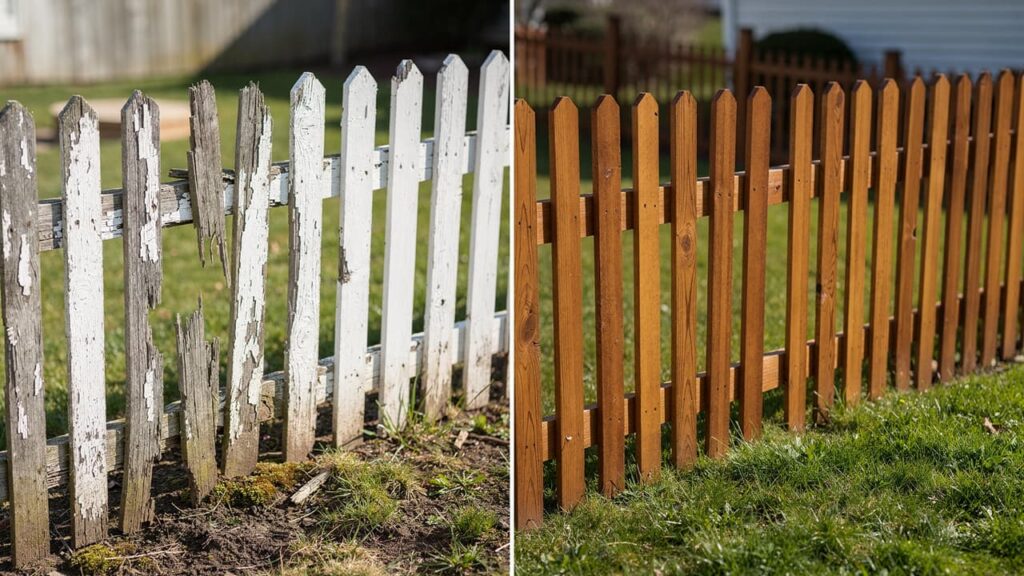
Stain follows the surface it is given. On sound wood, it absorbs at a consistent depth and rate, producing even color and solid protection. On boards that are damaged, swollen, or partially rotted, absorption becomes unpredictable. The result is patchy coverage that fades unevenly and peels sooner.
Repairs also directly extend the useful life of the stain. A well-applied stain on a solid fence can hold up for several years before needing a recoat. On a fence with existing problems, the same product may start failing within a season. Scheduling professional fence repair before staining is one of the more straightforward ways to get the full value out of a staining project.
When Should You Call a Professional for Fence Repair?
Homeowners can handle some repairs on their own. Swapping a single warped board or driving new screws into a loose rail is manageable. The situations below typically call for a professional assessment before any staining work begins:
- Multiple posts are leaning, rocking, or no longer plumb
- Rot has spread beyond a few isolated boards
- The fence sustained storm damage or was struck by a vehicle
- Posts show soft or hollow wood at the base
- The fence is more than 10 years old, with no repair history
A professional can catch problems that look minor on the surface but run deeper, including rot inside a post or moisture damage hidden behind a board face. Staining over that kind of damage means paying for the project twice.
What Customers Are Saying
[Testimonials/ Reviews placeholder]
Looking for Fence Repair and Staining Services Near You?
Stain Guys works through the full process, from the initial assessment through completed fence staining services, for wood fences across Georgetown and Central Texas. Every project starts with an evaluation of the fence’s condition. Problems that would shorten the life of the stain get repaired before any product is applied. The result is a finish that holds up longer and looks better from the start.
Request a free fence repair and staining quote today.
0 Comments