
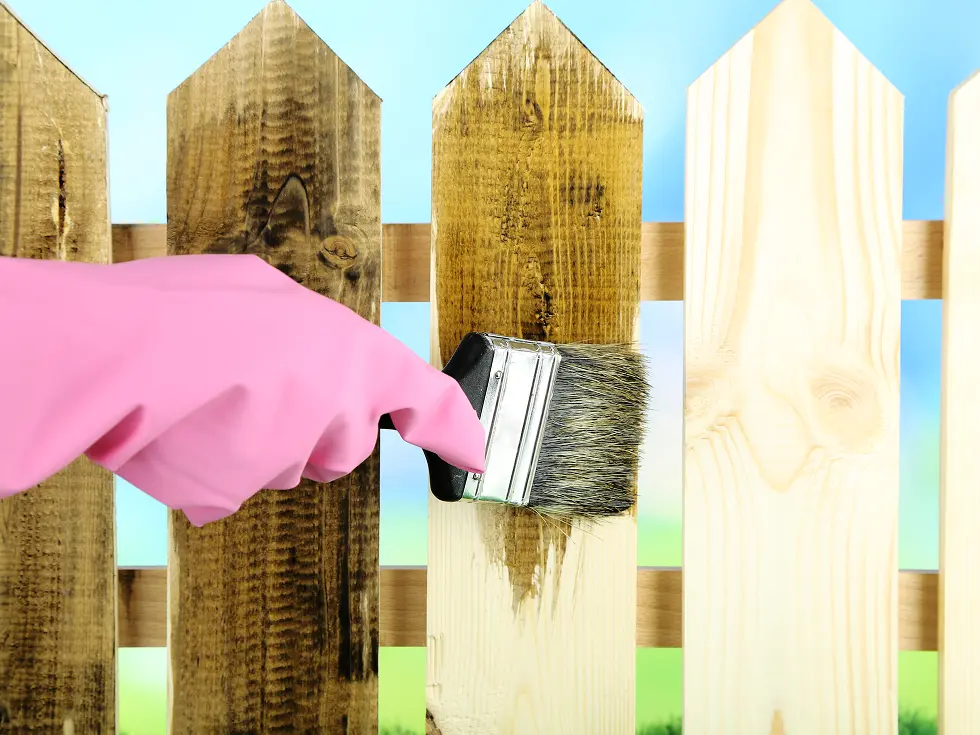
Fence staining versus painting is one of the most common questions homeowners ask before addressing a wood fence. Both products add color and a layer of protection, but the way they hold up over years of weather exposure is very different. According to a publication by the USDA Forest Products Laboratory, penetrating finishes like semitransparent stains do not form a surface film the way paints do, which means they will not blister or peel even if moisture gets into the wood. For a fence sitting through Central Texas heat, rain, and humidity year after year, that difference is not a small one.
The sections below cover how each option works, where each falls short, and what most homeowners in Georgetown end up choosing after weighing the long-term costs.
What Is the Difference Between Fence Staining and Fence Painting?
The difference comes down to how each product interacts with the wood itself.
How Fence Stain Works
Stain is a penetrating finish. Rather than layering on top of wood, it absorbs into the fibers, letting the wood breathe and move with seasonal temperature shifts without the finish cracking or peeling away. Semi-transparent stains preserve the natural grain, which is part of why cedar and pine fence owners tend to prefer them.
How Fence Paint Works
Paint works differently. It forms a solid film over the surface, covers the grain entirely, and creates a hard shell around the wood. Fresh paint looks clean and sharp, but that surface layer has a weakness: wood moves. It expands in summer heat and contracts when temperatures drop. Paint cannot flex with those shifts, which is why bubbling, cracking, and peeling are so common on painted fences in climates with extreme seasonal swings.
An outdoor fence takes on sun, rain, ground moisture, and temperature changes on a constant basis. A finish bonded to the surface will always be more vulnerable than one that has worked its way into the wood.
Does Fence Staining Protect Wood Better Than Painting?
For most exterior wood fences, yes. Staining offers better long-term protection across three key categories:
| Protection Factor | Stain | Paint |
|---|---|---|
| Moisture resistance | Penetrates wood from the inside out | Can trap moisture beneath its film |
| UV protection | Contains UV-blocking pigments | Provides surface-level UV barrier only |
| Wood movement | Flexes with natural expansion and contraction | Rigid film cracks as wood moves seasonally |
Central Texas fences get hit with intense sun through most of the year, and humidity levels shift significantly between seasons. Stain holds up under those conditions because it moves with the wood and blocks moisture from within rather than just sitting on top. For cedar or pine privacy fences, professional fence staining tends to be the more durable path, one that skips the familiar cycle of paint failure, prep work, and repainting.
Which Option Requires Less Maintenance Over Time?
Stain requires less corrective maintenance than paint over a fence’s lifespan. Here is what each option demands:
Paint maintenance challenges:
- Surface film breaks down unevenly, leading to visible peeling and cracking
- Repainting requires stripping or sanding the old paint before reapplication
- Moisture that gets under the film can cause wood swelling and further failure
Stain maintenance advantages:
- Semi-transparent stains can be reapplied without stripping the old coat
- Touch-up work blends more naturally than paint
- Reapplication is typically needed every two to four years, depending on sun exposure and wood type
Stretch that out over 10 years, and the gap becomes significant. A painted fence will almost always require more labor-intensive prep and more frequent repairs, driving up costs and taking more time. Fences that already have rot, loose boards, or structural problems should go through fence repair first, since any finish applied over compromised wood will fail sooner, regardless of product quality.
When Does Painting a Fence Make Sense?
Staining is the better fit for most wood fences, but paint still has a place in specific situations.
Matching Existing Architecture
When a fence runs alongside a painted structure, and the goal is a uniform, opaque finish in a specific color, paint makes sense. Stain colors shift slightly depending on the wood grain, so an exact match is harder to guarantee.
Non-Wood or Composite Materials
Metal fencing and some composite boards are not candidates for stain. Those materials need paint or a specialty coating. For natural wood, staining holds the advantage.
Old Paint Already on the Fence
A fence that has been painted several times presents a different challenge. If stripping the existing paint is not practical, another coat may be the most reasonable option. In any case, proper prep matters. Pressure washing to clear dirt, mildew, and loose coating is a necessary step before any finish goes on. A professional can assess the condition of the fence and recommend what will actually hold.
What Customers Are Saying
Stain Guys customers who previously had painted fences consistently point to the same improvements: less peeling, color that lasts longer, and a finish that does not demand attention every summer.
Georgetown homeowner Christina Yen noted that Jason “answered all of our questions quickly and thoroughly” and that the crew completed fence repairs and staining within a week, with results she described as looking great. Jeff Tsai, another Georgetown customer, wrote that Stain Guys had stained a significant portion of the fences in his 1,000-plus-home neighborhood, adding: “Great service is hard to find these days so look no further.”
See all our reviews: Stain Guys Google Business Profile
Looking for Professional Fence Staining Services Near You?
Stain Guys works with homeowners across Georgetown and Central Texas to protect wood fences built to last in this climate. Our team uses products rated for the UV load and humidity swings common to Central Texas, and we do not cut corners to get a job done faster.
Our fence staining services are built around long-term wood protection, not just surface appearance. From the first walkthrough to the final coat, the goal is a result that holds.
Schedule your professional fence staining service today. Contact us to get started.
0 Comments